FILM Do all those film links still work?

After ages on social media – clearly far too many hours – using them as mostly as news and interest feeds, a bit of discussion, disputation and the odd feeble joke – the shift away from The Dead Parrot has made me think a bit. Have I been sucked into a daily morning check of my feed, and then trawled down and down and down looking for something arresting? Yes and for far too much time to admit to freely.
A friend down the road was interested in a remark I was doing a Proust post/essay which she said she’d like to read. She’d like to read Proust too. I have got all the Moncrieff translation eBooks in the side link in Moleskine which I’ve pointed her to. They all seem to work. But randomly testing links generally across many old posts has prove disappointing as so many links are broken, so the only way to find the article or film site is to copy and past the title and do another search. It would be a thankless task to go through every old post, altering the URLs to get working links back.
Working with the recent updates of WordPress has proved to be a pain as they have made it harder to use not easier. Another learning curve just to get text and graphics where you want them. In the early days, it was possible to use the HTML version [still is but a struggle to override the visual version] of a post entry and be happy with that. The few bits of HTML you needed to write posts, add a head pic, was quite small. A pic could be re-sized by fiddling with the dimension numbers.
So while away my friend plans to read a bit of Proust. I hadn’t the heart to say I hadn’t read it from cover to cover, but have dipped in over the years as the mood took me. Of course as she’s going to set to, I felt saying I hadn’t tackled A la researche head-on, might put her off. So felt the impetus to say like Proust, <And so I was ready to write> (here read..). Though it would takes me many months, a year, because I’m mainly a bedtime reader. By reading some during the day and more at bedtime on the phone, I might make some progress. The advantage I have is to have read so much around, over, through Proust over the years, that it’s such familiar territory, as is his life and the milieu he lived in. particularly La Belle Époque leading up to the First World War. I know all about his interest in Ruskin and even that his dear mother had to help him out when he decided he wanted to translate Ruskin’s, Sesame and Lilies.
Ruskin’s Sesame and Lilies at Project Gutenberg
SLOW CINEMA
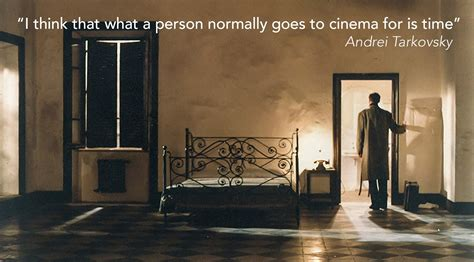
Exciting to find the person in the form of Nadin Mai, through a butchers of the Mastodon Fediverse, who writes The Art(s) of Slow Cinema blog, which I am pretty sure I put up on the side panel a while back. When I was regular visitor there, more years ago that I should really admit to, I didn’t much bother about who wrote it, but what the posts had to say.
For blogging, film (Cutting on the Action) and the previous lit blog (Moleskine Modality) seems to have taken second place to The Dead Parrot, a quaint old pub where we all used to meet on a Friday evening for a pint and a chat at that large table at the window. Even though almost certainly disreputable characters started to come to drink there, and we shot knowing looks at each other, we always went back hoping things would calm down a bit and that sanity would somehow prevail. Until of course The Dead Parrot was no longer the place to be to retain the sort of calm and contentment we obviously much valued, and everyone moved on to The Trumping Elephant in the next village to get the peace and quiet and convivial chit-chat we were used to.
Bill of course came too. He had always had the bar stool near the wall which no one dare sit on. Unless, that is, it was someone who was new to the place. We’d sit there just to see what Bill’s reaction when he turned up. He was like clockwork. At the stroke of eight of the old clock carriage in the corner, Bill would make his entrance. Not noisily of course. Just a sidling up and and a sitting down and the ordering of his pint. He didn’t talk a lot. But when we went up to the bar for another round, we all without failed, uttered a cheery, Back again Bill?, or something more strident like, How the world treating you then Bill? No one expected an answer, it was the greeting in the from of a question. Simple as that.
Now we’re all pretty much drinking at The Trumping Elephant and slowly picking up the threads of our former connections and friendships from our days at The Dead Parrot. I decided to avoid the dizziness of former ways and search assiduously on topics I was interested in, to see who was out there and what was being said, rather let the Fediverse spew out a constant stream of new Toots! as they call them, many of which were little concerned with my own core interests. That’s film, photography, science, a smidge of the arts and philosophy and a few more.
So up pops the author of The Art of Slow Cinema on Mastodon and looking over at the blog, read about its author, who explains that Bela Tarr was a lot to do with her conversion (if that was what it might be called) to Slow Cinema. Since writing those I feel now almost embarrassingly long student notes TL:DR-like posts about Tarr, particularly Satantango, this was good news. I would always look out for anything Tarr and see what was what was what. Had anyone written on the Cow Scene in Satantango? Not many, except disparagingly.
For now in the middle, dithering about, a return to Proust and Pinter’s adaptation that never came to fruition. Film adaptation has always called out to me as a way of understanding film, what it does, can and can’t do. Many great film writers and not a few directors have said pretty much the same thing. First that if you fancy writing scripts, then you should watch a lot of films and read a lot of screenplays. Seem to recollect Spielberg said pretty much that.
For some reason the process of adapting a book to film was so intriguing I couldn’t get it out of my head. And so it turned out to be with Proust and Pinter. Along the way a succession of film watching with adaptation themes, like you’ve guessed it, Kaufman’s, Adaptation. Film within film seems to be a kind of natural progression for this.
But it is the movies that many thought couldn’t be made into movies that is of particular interest. Hence Pinter. There’s even a Pinter and The French Lieutenants’ Woman up there in one or other of those blogs, for good luck. Can’t even remember what sort of a fist I made of that one, but do still feel the sense of engagement a project that fully takes one’s imagination can give. French Lieutenant was made into a successful film directly by the late Karel Reisz, despite there being much debate about the old-new scenes. That one’s certainly worth a re-visit to see who thinks what about it now.
But stop. where has slow cinema gone? I started on that and as night follows day we’re back onto adaptation. A script was written for Anthony Burgess’ Earthly Powers and could absolutely not interest anyone. A few years ago writing to it’s author, scriptwriter Hugh Stoddart, I decided to go through the whole book looking at which sections could be left out. I just wrote to him to ask if he’ll let anyone read his. It’s a messy business adapting massive, complex novels. But would love to see which bits he left out and if any corresponded to mine. Too many things; too little time.
Back to Proust. And if anything is slow, then A la researche du temp perdu is it’s apogee. Let’s face it too slow for many to find a way to write a film script for. This year is the centenary of his death. Missed the day itself, the 18th., which I’d hope to have a post ready for. Never mind there’s today and tomorrow left in November. This should encourage effort and application dispel dithering and prevarication. And looking up what others are writing! It is said the process of writing is the enjoyable bit. Concur with that. In the zone. Oh yes. But not all the time. Often doubts set in to dispel this notion one can get that if you’ve seen it all as a movie in your head, it should be easy to transcribe it back to text. It’s only when you realise you seem to have watched a Cinema Paradiso-like splicing of the outtakes not than the film you thought was entire in you mind…..
Proust Centenary – Harold Pinter’s Drafts of The Proust Screenplay

Pinter’s screenplay was never made into a film.
FILM Jean Luc Godard – filmography examined
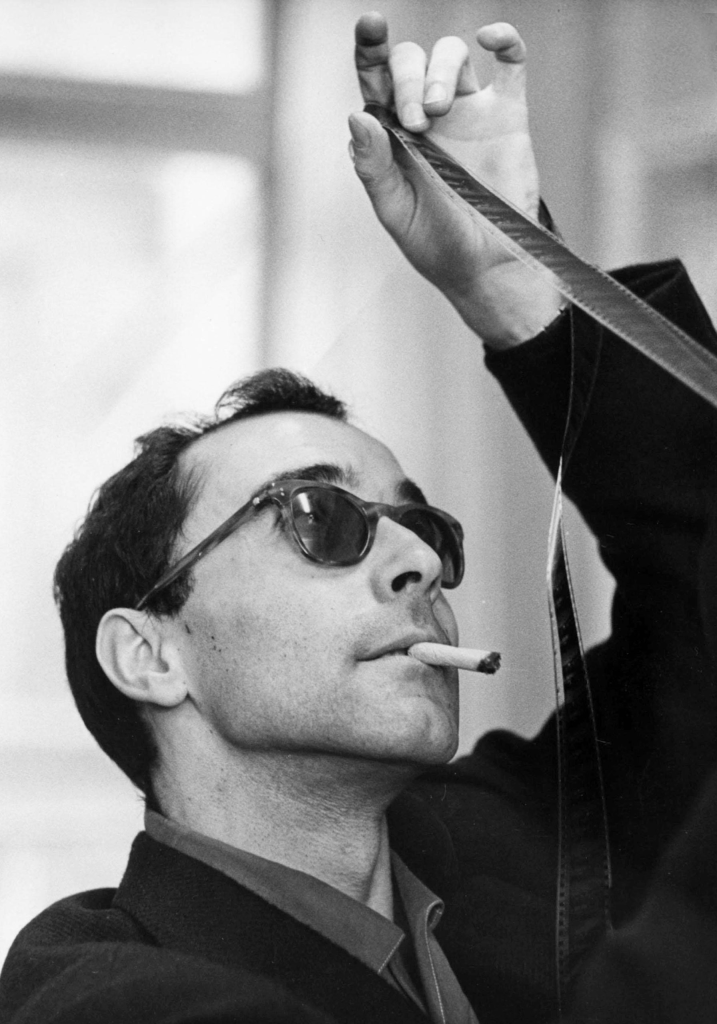
The Reality of a Reflection: An Exploration of Jean-Luc Godard’s Filmography
20 Nov 2017
FILM The Conversation Walter Murch
Murch tells us The Conversation was the first film he edited. He was also a sound designer.
Here he talks abut that famous, “He’d kills us if he had the chance” that crackly indistinct conversation that Harry Caul and his team record during a complex surveillance operation which happens with the credits running.at the beginning of the film. And at the end of the video explains how he edited in another version of the sentence with different emphasis later in the film.
FILM GODARD A Boute de Souffle – Footnotes to a film
Roland-Francois Lack on his blog The Cine-Tourist has done a fantastic post on A bout de souffle that he parenthesises ‘or rather, a trivialist’s slow crawl through it’s minutiae’.
A set design/costume design/location/ nerd’s delight.
Go to his home page for all his stuff.
| The Cine-Tourist only writes about places that he knows, and since he doesn’t travel much this site is chiefly about films made in Paris, Geneva and London (especially Muswell Hill, where he lives): |
https://www.thecinetourist.net/a-bout-de-souffle-footnotes-to-the-film.html#
FILM Béla Tarr’s Turin Horse
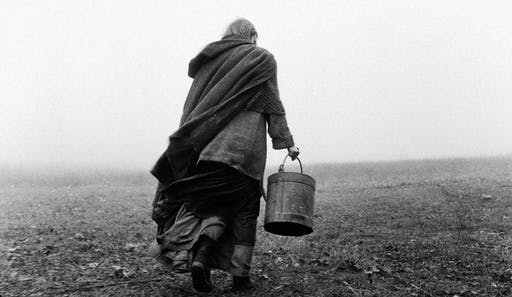
Destructive Complacency and the Call to Action of ‘The Turin Horse’
A short intro to a 17 video essay, “explains, the father and daughter’s repetitive purgatory is not a punishment. It’s a state of mind: a destructive complacency, best described by who else but Nietzsche himself.”
With it a reference list to other Bela Tarr video essays:
- Here’s Slate on why Hollywood gets Nietzsche wrong (“Nietzsche is about as misunderstood as the teenage boys who like him”)
- Why Béla Tarr transcends the void
- Here’s the trailer for the making-of documentary about The Turin Horse, Tarr Bela, I Used to Be a Filmmaker. The documentary is an essential watch for anyone looking for a more personal perspective to Tarr’s filmography
- Here’s Thomas Elsaesser, an international film historian and professor at the University of Amsterdam, introducing The Turin Horse
- Béla Tarr brought his 1994 film Sátántango to the 2019 Berlinale, and it raised a lot of “confusing” emotions for the director (“I cannot say I am happy…I cannot say I am sad…I became 25 years older”). Also: if you want to hear Tarr absolutely obliterate over-edited Hollywood films, this is the clip for you.
- Here’s Béla Tarr and film critic Howard Feinstein discussing the filmmaker’s understated humor, the evolution of his style, and the history of black and white photography in Hungry
FILM EDITING
Master Filmmakers on the Craft of Film
https://jonnyelwyn.co.uk/film-and-video-editing/master-filmmakers-on-the-craft-of-film-editing/
Not able to use the new version of WordPress yet, so the link will just have to be out there instead of embedded under the title, as they usually are.
This very good on editing as it has a set of videos with the some of the best around.
COTA has a collection of editing posts, both because I early on realised to write a script you really would need to know how it might end up and try to write accordingly. In a photographic analogy: framing in the camera.
FILM The Conversation

‘The Conversation’: A Brilliantly Composed Symbol of Watergate America
Cinephilia and Beyond Another longform form this wonderful film site. Please if you use it make a small contribution.
As an added treat a pdf of the screenplay, by Copploa, written in 1973, which is downloadable, but if you want it not to be popping up up as a webpage but as a file on your PC, make sure to save it as such.
The centre-piece is a facsimile of an interview in Filmmakers Newsletter, 1974, with with Brian De Palma and Coppola getting into the nitty-gitty of The Conversation’s conception and making. De Palma going on to make Blow Out in 1980, starring John Travolta.
NB. Coppola mentions Blow Up as an influence.
Also, for the real enthusiasts: Drew Morton’s video essay, Cross-Cut, looking at Blow Up [1960], The Conversation [1973] and Blow Out [1980], here embedded in this Indewire page with a short intro. It’s only 6 mins long, a true video essay made up of just video, doing the job of comparing and contrasting – film explaining film – not one of those video clip/slide-show type-thingummies with lecture tagged on. Though many of this type can be good, there is that thing about whether such a detailed lecture might be better as a separate essay/paper. That debate about video essays is probably still going on. Now the video essay, a well-thumbed subject in itself, has evolved a lot since the early days, with academics pouring over them in various ways.
If you know your three films well, and you’re into film-making, can’t fail to be impressed by Drew’s brilliant editing.
Before coming across Drew Morton’s essay when he first put it up, had myself spent inordinate amounts of time taking screen grabs of all three films, hoping to construct a slide show doing the same thing, lacking the wherewithall to do clips, again with no audio essay superimposed on the visuals. Having seen Drew’s, the idea was soon dropped, but mine would have gone into a lot more detail of all three films. Self-evidently video essays are not ideal for anyone who doesn’t know the film or films. And one of my pet hates, trailers giving awy too much information, even Drews sparse choice of clips would give too much away, in my extreme trailersist view.
A trailerist of course almost kicks in TV screens while shoutung, No, No, No! trying to stop it when the next episode of a series is laid out in such detail as to provide a clear impression of the whole plot, even if it’s a bit jumbled up.
Drew’s vimeo page shows he’s not been a slacker, producing many classy video essays.
Drew has put up earlier shorter versions of Cross-Cut, linked to below, which each have two intercut quotes, but no voice-over, which point to film essays and the video essay form, rather than directly to the three films.
As he puts in his comments on v .5:
“What began as “A poetic introduction to the fiction film as videographic criticism that seeks to illustrate the works of Raymond Bellour and Laura Mulvey through BLOW OUT, BLOW UP, and THE CONVERSATION” eventually became a more modest experiment in exploring the narrative, stylistic, and thematic connections between Michelangelo Antonioni’s BLOW-UP, Francis Ford Coppola’s THE CONVERSATION, and Brian De Palma’s BLOW OUT. This is the first – thumbnail – version.”
and v .75 :
“What began as “A poetic introduction to the fiction film as videographic criticism that seeks to illustrate the works of Raymond Bellour and Laura Mulvey through BLOW OUT, BLOW UP, and THE CONVERSATION” eventually became a more modest experiment in exploring the narrative, stylistic, and thematic connections between Michelangelo Antonioni’s BLOW-UP, Francis Ford Coppola’s THE CONVERSATION, and Brian De Palma’s BLOW OUT. This is the second version – made before the theoretical framing device was ultimately jettisoned.
Differences from Version .5: I realized that I needed to begin intercutting between the three films earlier to establish more of an aesthetic rhythm and conceptual dynamism. If I had stuck with the structure outlined in draft .5, I wouldn’t have introduced THE CONVERSATION until almost 2 minutes in (and BLOW OUT probably nearly three minutes). In short, it was becoming a piece dominated by discrete thirds without really doing much intellectually.”
CROSS-CUT (AKA Cinefilea, Version .5)
CROSS-CUT (AKA Cinefilea, Version .75)
And again for convenience, v. 1.0 :
CROSS-CUT
FILM DOCUMENTARY CHRIS MARKER PIERRE LHOMME The Lovely Month of May 1963

The Lovely Month of May
A documentary film by Chris Marker and Pierre LHomme, 1963
PHOTOGRAPHER David Goldbatt 1930-2018
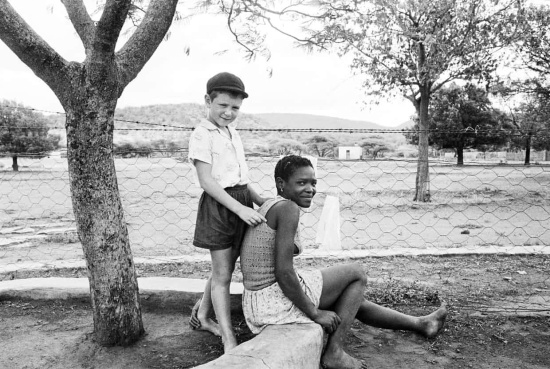
‘Colour was too sweet for apartheid’: the austere genius of David Goldblatt
~ The South African photographer, who died this week, caught apartheid’s grotesqueness without ever letting anger take over. His portrait of a place and a time is without equal in modern photography
South African photographer David Goldblatt dies aged 87
~ Documenting the racial divide during apartheid, he was credited with bringing a strong moral and ethical dimension to his work
David Goldblatt, the photographer who was South Africa’s conscience – in pictures
The big picture: Shop assistant, Orlando West, Soweto, 1972
~ David Goldblatt captures a defiant private moment in apartheid-era South Africa
FILM Plariarism v homage
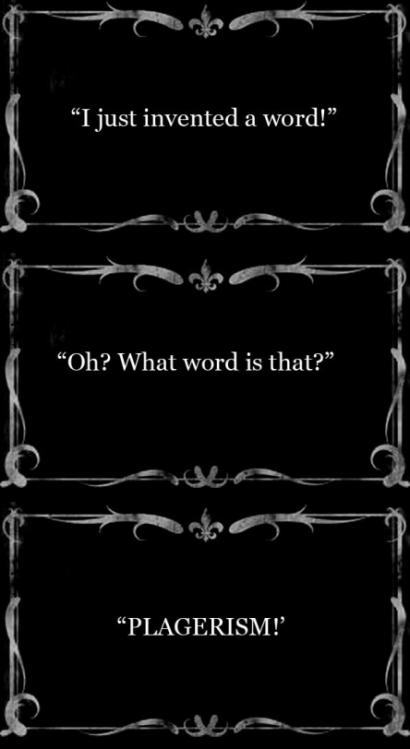
Imitation Game: The Difference between Homage and plagiarism
~ Homage is not a lesser form of filmmaking — let alone a form of theft — but a natural part of loving and making cinema.
Meg Shields, Film School Rejects 12 Feb 2018
“Either a filmmaker transparently deploys a reference, or a filmmaker knowingly passes off someone elses’s work as their own.”
Though of course this would not be such an interesting subject if it was that easy.
Shield notes ‘…Amelie director Jean-Pierre Jeunet accused del Toro of plagiarism. According to the French director, the sequence in The Shape of Water where Richard Jenkins and Sally Hawkins dance in unison while seated as an old musical number plays in the background was “[copy] and pasted” from Jeunet’s 1991’s art-house hit Delicatessen.’
But hold on a minute,
‘Shape of Water’ Hit With Plagiarism Allegations Following 13 Oscar Nominations
~ Paul Zindel’s son David says celebrated film is “obviously” based on late father’s play ‘Let Me Hear You Whisper’
Joyce Chen, Rollong Stone, 26 Jan 2018.
So this one alone is well-travelled:
Everything to Know About the Shape of Water Plagiarism Controversy
Eliza Berman, Time 3 March 2018
Film plagiarism accusations go way back, as have literary ones.
Any fule kno when accusations of plagiarism fly, it’s the writer not the director at the root of the problem, though when they do fly, it’s the investors and film production company that gets it in the neck. There are all sorts of cover-one’s-arses and insurances built into filmmaking, so maybe there’s one for plagiarism that thought it was homage.
My interest lies in how film writers are usually very knowledgeable about films. So many writers and writer-directors say they learnt their craft from obessively watching films from childhood. It’s part and parcel of films to refer to those that came before. Then there’s what you think to be some original storyline that disappointingly turns out to be close to something else as the writing progresses, which has to be ditched or turned into an artful homage.
FILM film vs digital
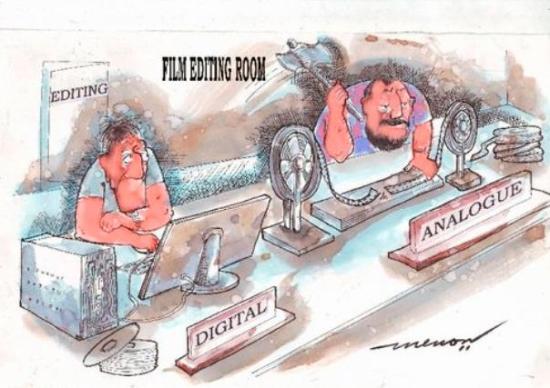
by kar2nist [Shanti-Savera Ernakulam, India]
Analog/Digital Comparison: 35mm vs. Arri Alexa vs. Arri Alexa with added grain
Several short test videos in Vimeo
Generation Film
The rise of digital technology has meant tough times for people shooting on film, but against the odds, a new wave of filmmakers are turning to celluloid…
TV DRAMA Frozen Sky 2011
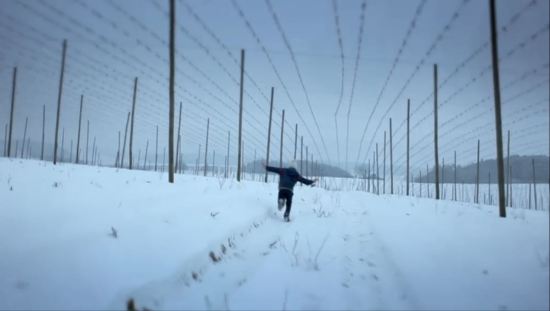

Frozen Sky
All 4 – 90 min x 2 part German drama
Frozen Sky 2013
FILM pan and scan


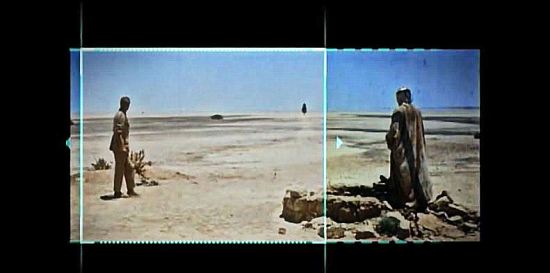
Lawrence of Arabia, David Lean, 1962
Scorsese, Pollack, Mann & Hanson on How “Pan and Scan” Ruined Films for Decades
5′ video ~ short introduction
* Look out for Scorsese mentioning 4:3 increases the size of the frame and so reduces resolution.
The 15 Basic Elements to Know to Better Your Film’s Mise-en-Scene
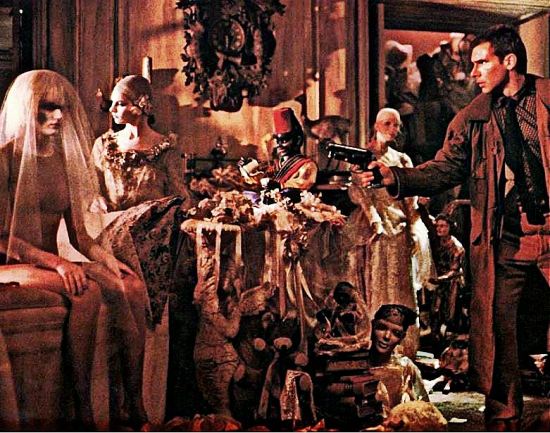
Blade Runner 1982
The 15 Basic Elements to Know to Better Your Film’s Mise-en-Scene
Filmmaker Michael Hall of Shohawk, in Mentorless, filmmaking blog.
+ 15 diagrams. Who wants text when you have graphics? It’s a visual medium! Have a thing about mise-en-scene? Don’t even know what it is [but it’s in French and looks interesting..]? This is for you and you.
Michael has done another mise-en-scene:
7 Ways Mise-en-scene Will Make You a Better Filmmaker
which also includes the same 15 diagrams at the bottom.
Pinched the Blade Runner header from this post.
FILM Ed Wood 1995
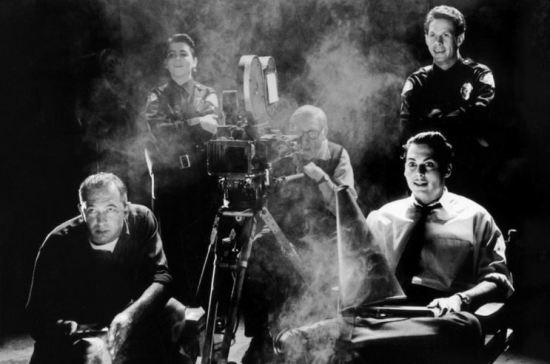
‘Ed Wood’: Tim Burton’s Beautiful Ode to a Fascinating Filmmaker, From One Outsider to Another
Cinephilia and Beyond
The ever magnificent C & B presents one of its majestic longforms on Tim Burton’s Ed Wood [1995]
Oozing with images and a handful of YouTubes. Plus a Q & A with Tim Burton
As usual the screenplay is embedded for reading in place, plus a downloadable pdf. If unfamiliar with their downloads, a click opens it in another web-page. But of course being a screenplay person, you want it on your HD. So, once downloaded, Go to File location, right mouse and and then open it with your pdf viewer. Save As [change the file name if you want to here] and Bob’s your uncle.
As I normally do, this screenplay is to be found in the right side bar under screenplays of which there is a small collection.
Other:
Cult films to see before you die: Ed Wood
James Oliver, Reader’s Digest
Of course the web is full of Ed wood reviews and essays – but just one extra for good luck.
The DVD can be found pretty cheap.
SCREENPLAY Christopher Nolan Screenplays
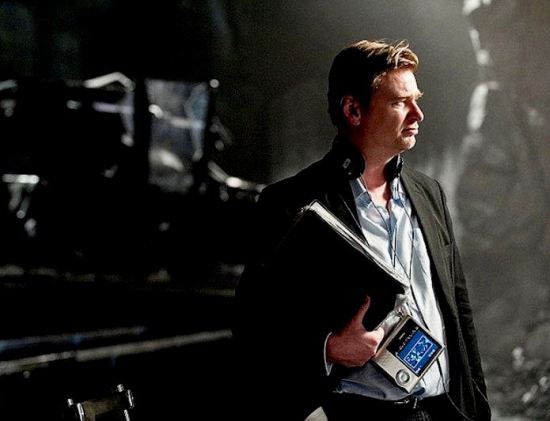
Christopher Nolan Screenplays
Inde Film Hustle, 13 Sept 2017
All downloadable pdfs, not dialogue transcripts
Dunkirk (2017)
Interstellar (2014)
The Dark Knight Rises (2012)
Inception (2010)
The Dark Knight (2008)
The Prestige (2006)
Batman Begins (2005)
Memento (2000)
Following (1998)
The keys of the Street (1997)
FILM ADAPTATION How not to adapt a novel
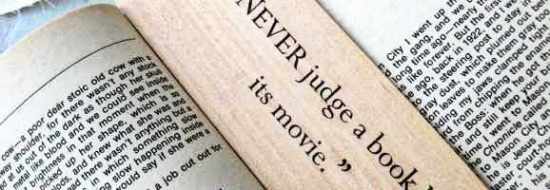
How NOT to Adapt a Novel
Christopher Osterndorf, The scriptlab, 7 Sept 2017
Well, it’s the title isn’t it? Buy the book and then find it’s nothing like you imagined between the covers.
Short but for me not so interesting – despite the tips – because the films discussed are not the sort of thing I would watch, but novel to film is something I return to again.
In any case who can resist films about writers trying adapt novels? Plenty? Oh, well they fascinate writers. And that’s what counts. Though of course we’re on writers adapting novels here. Whereas, what happens when the script gets into the hands of the production team is another matter.
OTHER
The Novel or the Film?
Siobhan Calafiore, The Artifice, 6 Feb 2014
Borrowed her header for my header.
Novel or film is what follows from film adaptation anyway so this is one to stimulate the juices on that topic.
SCREENPLAY: The Myth of the Three-Act Structure
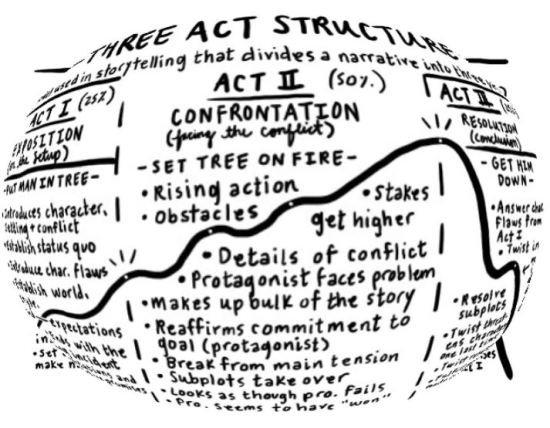
graphic from: A History Of The Three-Act Structure
The Myth Of The Three-Act Structure
Bill Mesce, at ShoreScripts
Chatty. Lot’s of examples.
Well, you’ve done a course or two, got the books, …and you can find as many of these things as there are actual script, but here’s two
Save the Baby! On the Benefits of the Three-Act Screenplay Structure
A History of Three-Act Structure
 cutting on the action
You must be logged in to post a comment.